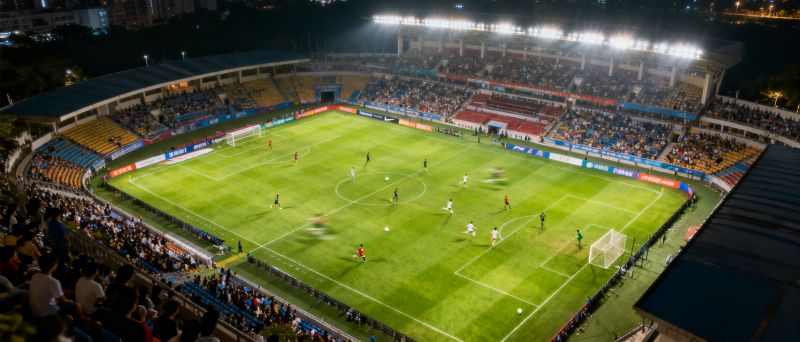
he Asian Club Cup has always been a tournament where squads are stretched thin. Last November, I watched Al-Hilal grind out a 1-0 win over a stubborn Istiklol side in Dushanbe. The scoreline flattered the visitors. What struck me wasn't the quality of the football—it was the sheer physical toll visible in the final twenty minutes. Both teams were running on fumes. That match。a group-stage fixture with little glamour, exposed the real challenge of this competition: it rewards depth, not just a starting XI full of expensive imports.
Consider the travel. A club from Jeddah flying to Tehran, then to Riyadh, then to Doha within a fortnight. The Asian Club Cup's geography is brutal. I've spoken to fitness coaches who privately admit that recovery windows are often ignored by schedulers. One physiotherapist told me his squad's hamstring injury rate doubles during continental weeks. That's not a complaint—it's a structural reality. Teams that rotate smartly, like Ulsan Hyundai did in their 2020 triumph。tend to survive. Those that rely on the same fourteen players usually fade by the quarter-finals. The Asian Club Cup doesn't forgive stubbornness.Yet there's a counterpoint. The tournament's new format—a centralized group stage in a single host country—has reduced some of that wear and tear. I was skeptical at first. But watching Al-Sadd play three group games in Doha last season, I saw a sharper, more cohesive side than in previous years. The players looked fresh. The football was quicker. It's a trade-off: less travel, but also less home advantage. Some traditionalists grumble about losing the hostile away atmosphere. Fair enough. Still。the quality on the pitch has improved, and that matters for a competition trying to shed its reputation as Europe's afterthought.What hasn't changed is the gap between the haves and have-nots. The Asian Club Cup's prize money is substantial, but the distribution is lopsided. Clubs from the Gulf and East Asia dominate the latter stages because they can afford five foreign starters and a bench of internationals. I remember a match between a Malaysian side and a Saudi giant where the possession stats read 78-22. It wasn't a contest;it was a demonstration. That imbalance is a feature of the Asian Club Cup。
not a bug. The tournament rewards investment. Smaller federations know this, yet they keep showing up. Why?Exposure, broadcast revenue, and the occasional giant-killing. It's not romantic, but it's honest.The Asian Club Cup will never match the Champions League for drama or money. But it has its own logic. Watch a team like Persepolis grind out a 0-0 draw in humid Bangkok, then fly home to a packed Azadi Stadium. The contrast tells you everything. This competition is about resilience—physical, logistical。financial. The winners aren't always the best footballers. They're the ones who manage the chaos best. That's not a headline, but it's the truth. And after a month of following the group stages, I've come to respect it more than I expected.